What's the Bun-Tossing Mystery That Brings a Town Together in Delightful Chaos?
Raining Currant Joy: The Ingenious Evolution of Abingdon's Eccentric Bun-Throwing Tradition
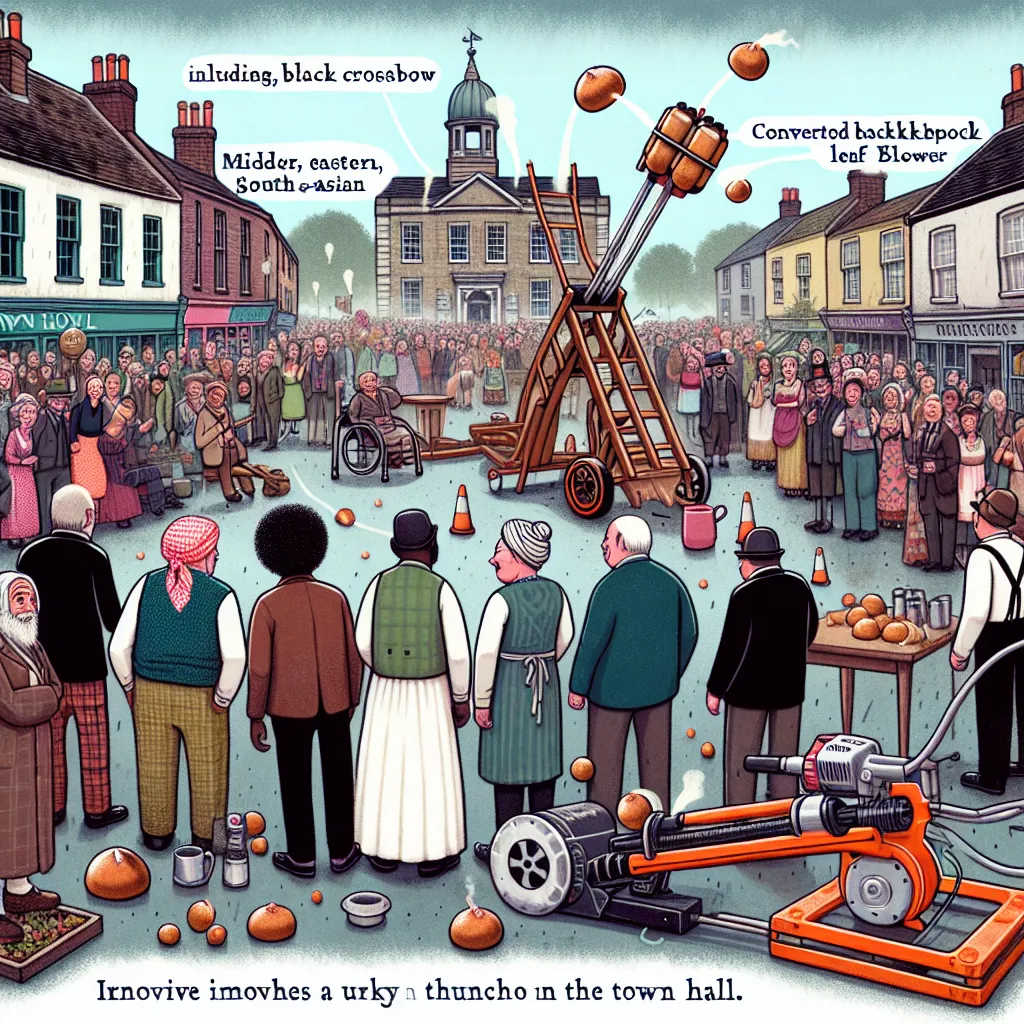
Abingdon is an old town with a quirky tradition that few would believe. Once every royal event, a town-wide ritual takes place—throwing buns from the top of the town hall to the eagerly awaiting crowd below. This isn’t just a few buns but an impressive 6,000 currant buns! You see, this eccentric event holds a special place in the hearts of locals, dating back to the 1700s with legends of tumbling hot cross buns celebrated throughout history.
But here’s where the saga takes a modern twist. The townsfolk approached for help with their annual Jubilee bun throw, which had a tiny hiccup—the buns rarely reached the people at the back. Imagine, the front row greedily clutching five or six buns each while those at the back caught nothing but a sense of injustice.
With a challenge this unique, a novel solution was called for. Step into the world of physics, probability, and a touch of crazy ingenuity. After sweating through complex calculations and experiments involving theodolites and even a Cessna pilot hurtling buns mid-air, it was time to harness technology for good.
In came the heavy artillery—a hot crossbow, a mortar-like bun launcher, and the pièce de résistance, a backpack leaf blower converted into a bun machine gun. The plan? To rain down buns upon the crowd, ensuring that not a single soul went home without their fair share.
On a rainy, dreary Wednesday that seemed destined to thwart our enthusiastic efforts, morale remained undeterred. The dedicated Abingdon community gathered in the pouring rain, as British as it gets, awaiting their bake-off. The initial hand-thrown attempts were gallant but couldn’t quite get through the dense crowd. Enter stage right—the rapid-fire bun artillery.
The scene was nothing short of spectacular. Buns flew like missiles, landing squarely in the hands of eagerly awaiting festival-goers. Each innovative gadget played its part in this grand, floury symphony, showering jubilant faces with treats. It was a triumph of technology over tradition, ensuring that every attendee left with the sweet joy of the event.
The event not only highlighted the peculiarity of British traditions but also showcased the delightful capacity of human ingenuity—to take a unique problem and solve it with flair and a touch of madness. By the end, in spite of the relentless rain, it was a day of triumph and smiles, proving what can be achieved when a community comes together.
In the end, Abingdon taught us an invaluable lesson: whether centuries-old traditions or modern-day marvels, the essence lies in the collective joy and shared experiences. So, here’s to more buns, celebrations, and the creative spirit that keeps them alive.