What Happens When Golfers Trade Clubs for Tanks?
Tank Enthusiasts at Fort Knox Relive Wartime Heroics with Passionate Reenactments
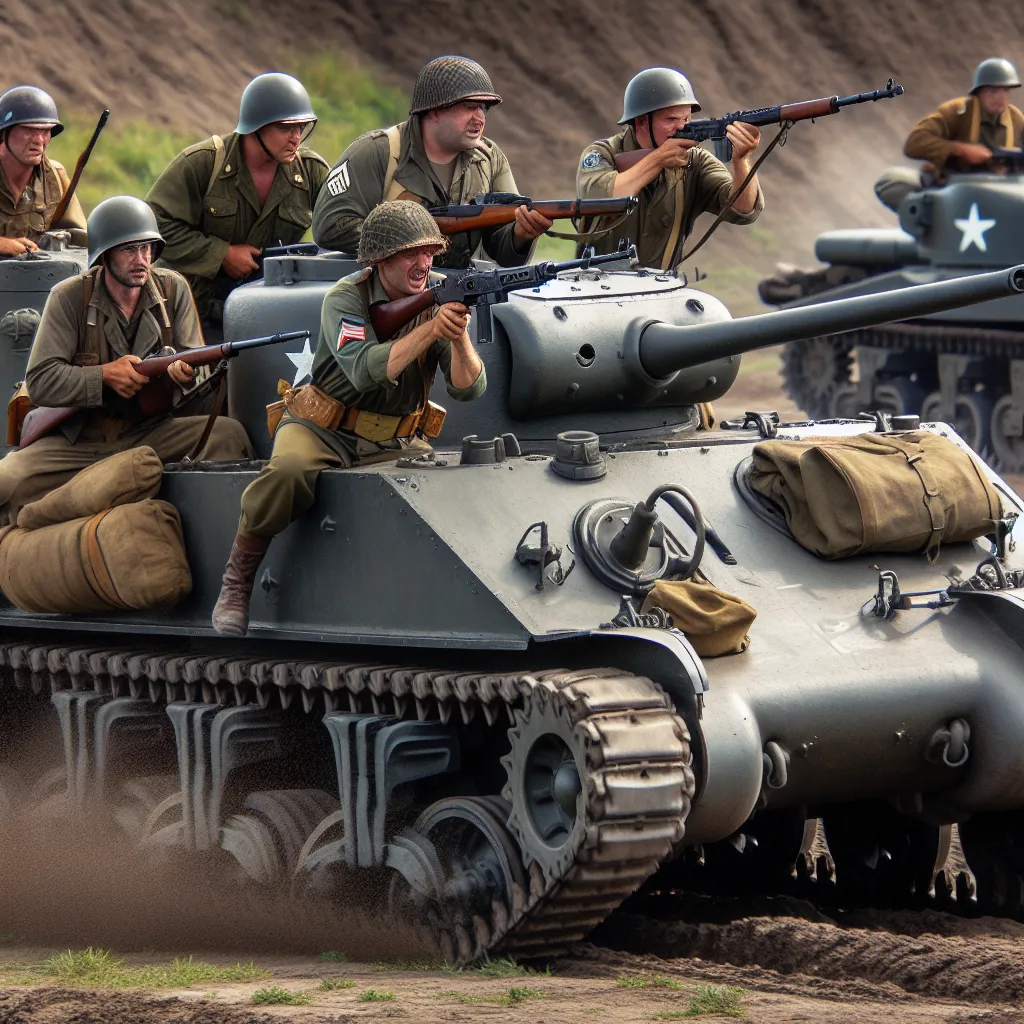
At Fort Knox, Kentucky, while most are out playing golf, a group of tank enthusiasts are indulging in a different kind of hobby. Among them is John Schuch, a machine gun lover from Missouri. John owns two M5A1 Stuart tanks, each worth over $100,000. His passion isn’t just collecting these massive machines but taking them out for a spin.
This group of hobbyists, known as the 14th Armored Division, is quite a unique bunch. They gather for battle reenactments a few times a year, reliving the intense moments of wartime with vintage vehicles and thousands of shells. These events are massive undertakings with people from all over – some even travel from California with their own military gear to join in the fun.
The M5A1 Stuart tank, which John owns, is a lightweight, fast-moving vehicle. Armed with a 37 mm main gun and three .30 caliber machine guns, it was famously used by Patton’s Third Army during the Normandy landings and succeeded in North Africa against Rommel. But John’s not doing this alone; his tanks are kept in top shape by Tim Garrett, the platoon leader and self-professed tank nut. Tim is responsible for maintaining the units and ensuring everything runs smoothly and safely during battles.
For John, this isn’t just a hobby; it’s a passion he shares with his wife, Pam. Pam is an essential part of the team, handling everything from operating the radio to wielding a machine gun. Her expertise is so well-regarded that John often turns to her for help when his machine guns malfunction.
These reenactments aren’t cheap or easy to organize. They require substantial money, time, and dedication. This particular event involved over a million dollars’ worth of vintage hardware. Despite this, the group prioritizes safety above all – ensuring that no unnecessary risks are taken during their mock battles.
The thrill they experience is unmatched. The sights, sounds, and smell of the battlefield come to life, giving them a taste of real combat. The reenactment’s thrilling journey sees the 14th Armored Division taking on a strong German force featuring a powerful tank destroyer, the Hetzer. Initially, the superior German firepower puts the allies on the back foot. However, by maneuvering cleverly, the 14th Armored Division eventually outflanks the enemy, emerging victorious after an intense mock battle.
It’s not just about fun and games for John and his friends. Playing these war games is their way of honoring the incredible bravery of World War II soldiers. It’s a way to keep history alive and remember the soldiers’ extraordinary courage and sacrifices. For John and his team, these reenactments are a respectful tribute to those who fought for freedom.