science

Could a Storm So Powerful Really Rival an Atomic Bomb?

When a Superstorm Brought a City to Its Knees and Sparked Unyielding Resilience
Could a Storm So Powerful Really Rival an Atomic Bomb?

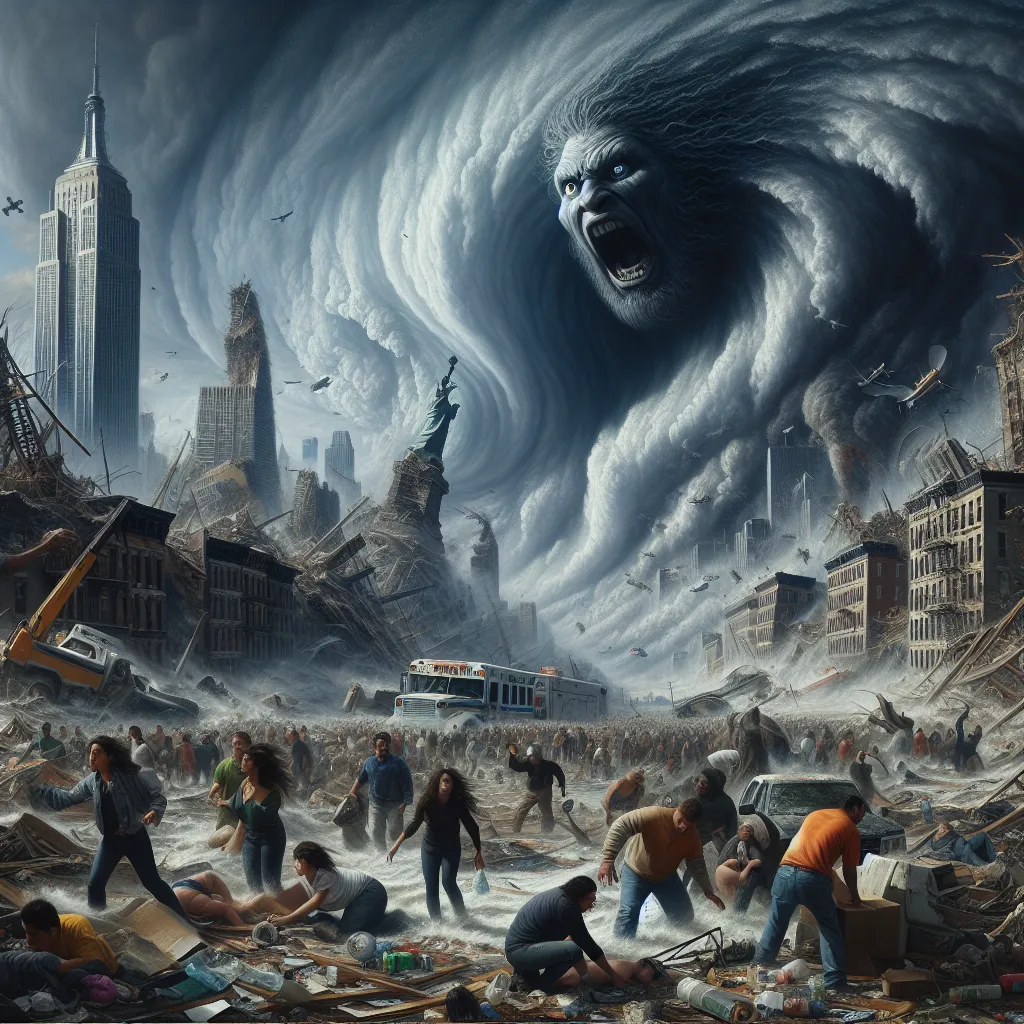
A monstrous storm, nearly 1,000 miles wide, slammed the northeast coast of the United States with a force comparable to an atomic bomb. This was a natural disaster of a scale never witnessed before. Mother Nature unleashed her fury, and the devastation was beyond anyone’s imagination.

I still can’t wrap my head around it. I’ve never seen anything like this in my life. It’s like something out of a disaster movie. Picture this: 50 homes burned to the ground. Entire neighborhoods turned to ashes. People kept asking, “What’s going on?” but there were no answers, only astonishment and fear.

Heather called me, barely able to speak. She was just grateful to be alive. There was no power, no phone service—nothing. We were cut off from the world, trying to make sense of what felt like the end of days.

When the people on the East Coast woke up after Sandy passed, the scene was surreal. This storm had pounded the coastline from Florida to Massachusetts with unimaginable power before making landfall in New York City. The city was drowned, invaded by the ocean.

Sandy’s transition into a superstorm was terrifying. Millions scrambled to cope with the aftermath. New York City turned into a chaotic mess, leaving its residents in a state of shock.

The statistics were overwhelming: nearly 200 dead, damage estimated at $50 billion, and over 8 million people without power. It all happened in a span of 24 tragic, unforgettable hours. The name Sandy will forever evoke memories of destruction and resilience.


Similar Posts
Blog Image
Ancient Technologies Modern Science Still Cannot Explain: Roman Concrete, Greek Fire, and Lost Secrets

Discover ancient technologies that still baffle modern science—from self-healing Roman concrete to Damascus steel with nanotubes. Explore lost secrets our ancestors knew that we're still trying to crack today.

Blog Image
Acoustic Black Holes to Sonic Levitation: 6 Sound Phenomena Challenging Physics Today

Discover 6 unexplained sonic phenomena that challenge physics as we know it. From acoustic levitation to sound black holes, explore how sound waves reveal hidden mysteries of our universe. Learn why scientists are amazed.

Blog Image
Is Conception a Secret Masterpiece or Nature's Greatest Gamble?

Life's Miraculous Timeline: From a Single Cell to a Newborn's First Breath

Blog Image
How Animals Secretly Talk: Scientists Decode Hidden Communication from Whales to Elephants

Discover how whales, birds, octopuses, elephants and bats communicate through complex signals we're still trying to decode. Learn what animal communication reveals about intelligence.

Blog Image
Cellular Memory: Are Your Ancestors' Experiences Hidden in Your DNA?

The Quantum Cellular Memory Theory suggests memories aren't just stored in the brain, but in cells throughout the body. This concept explains organ transplant recipients experiencing donor traits and inherited traumas. Cellular memory may involve quantum effects and chemical tags on DNA. The theory proposes a psychosomatic network where memories are distributed across the body, potentially passing down through generations.

Blog Image
Epigenetics Revolution: How Environment Shapes Our Genes and Health

Explore groundbreaking discoveries in epigenetics reshaping our understanding of heredity. Learn how environment and lifestyle impact gene expression and health across generations. Discover new frontiers in personalized medicine.