Could Finding Aliens Spell Humanity's Doom?
The Perils of Waking Up to a Universe Teeming with Life
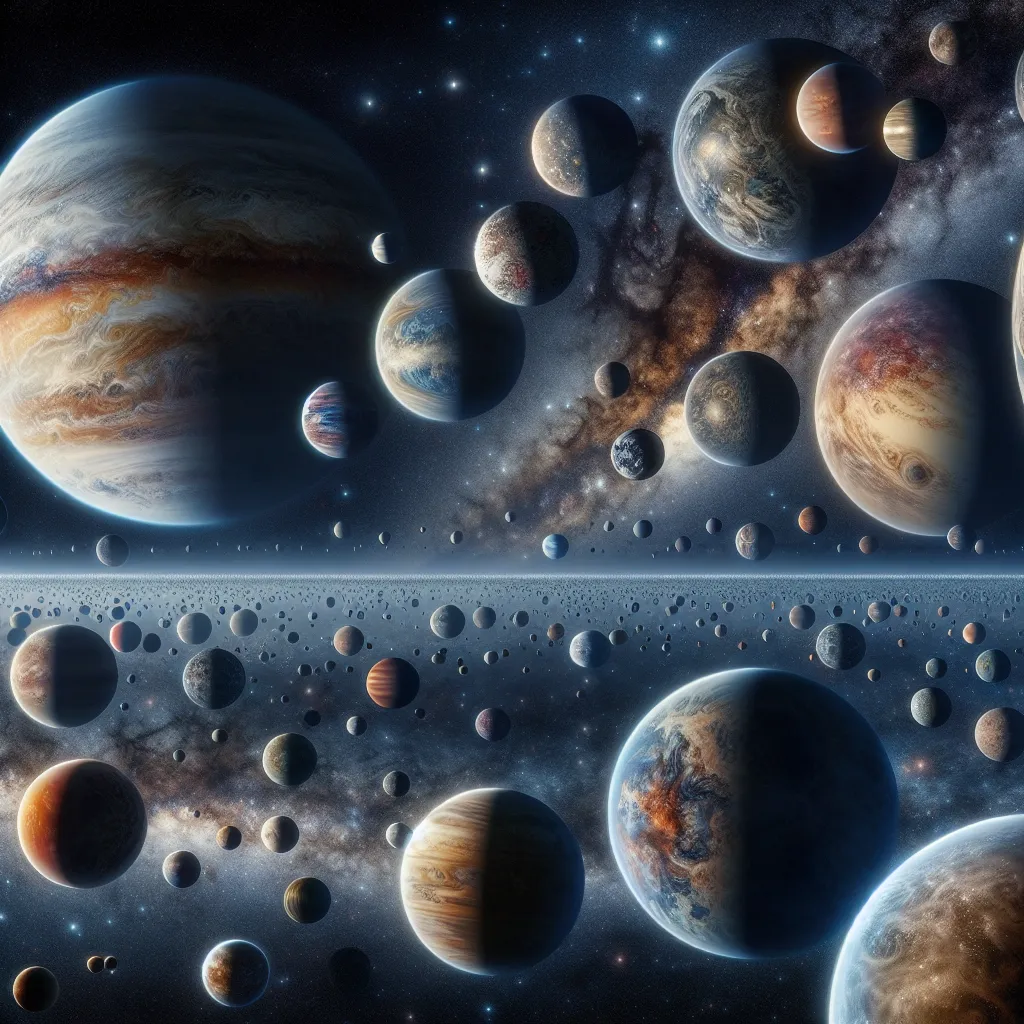
Imagine waking up to the news that NASA has discovered aliens. Not just one type, but bacteria on Mars, strange fish in Europa’s oceans, and ancient ruins on Titan. Exciting, right? Well, not exactly. This might actually signal the end of humanity, and the reason why is quite daunting.
Let’s picture life’s journey like climbing a staircase. The first step is lifeless chemistry turning into self-replicating patterns. Next, this early life grows more complex and efficient with energy. Then, cells combine to become multicellular beings, paving the way for diversity and further complexity. The step above leads to species with big brains, creating tools, culture, and shared knowledge. This helps them dominate their planet, altering it to fit their needs. That’s where we are now, just starting to explore beyond our planet.
Life naturally wants to spread everywhere it can, because planets have limited resources and lifespans. If a species wants to survive long-term, it must colonize other places. This means the logical next steps are exploring the solar system, then reaching other stars, and eventually becoming a galaxy-wide civilization. This seems like it should be a universal principle for any intelligent species.
But there’s a catch. Despite the countless planets and potential for life, we see no evidence of advanced galactic civilizations. The universe appears empty. This suggests a “Great Filter,” a challenge that prevents species from advancing past our current stage. This filter could be either behind us, meaning we’ve already overcome it, or ahead of us, spelling our doom.
If the filter is behind us, it implies that one of the early steps in evolution is nearly impossible. It could be the origin of life itself, which may be exceedingly rare. Another candidate is the emergence of complex animal cells. A unique event occurred once where a primitive cell merged with another, forming a powerhouse cell structure. This enabled significant energy production and the development of complex life forms. Maybe our level of complexity and intelligence is a one-time cosmic fluke.
On the other hand, if the filter lies ahead, it means other civilizations have met their end due to insurmountable challenges. These could be self-inflicted, like nuclear war, runaway nanotechnology, or a superbug. It might also involve environmental destruction from over-competition for resources, leading to uninhabitable planets. If this is true, our odds of survival look grim.
This is why discovering life elsewhere would be worrisome. The more common life is, the higher the chance that we haven’t yet encountered our Great Filter. Simple bacterial life would be unsettling, complex organisms worse, and intelligent life outright terrifying. Ancient alien ruins would spell out doom in capital letters.
The best-case scenario for us is that we find no life at all. Empty planets mean fewer chances of deadly filters ahead. It would mean a galaxy full of untapped potential, with billions of worlds waiting for us to explore and colonize. Let’s hope for a silent universe filled with endless opportunities for humanity.