Is the Illuminati Secretly Running the Music Industry?
Stars, Symbols, and Secret Societies: How the Illuminati Myth Shapes Modern Music Culture
The Illuminati, originally a secret society started by Adam Weishaupt back in 1776, has morphed from a legit historical group into a modern-day conspiracy fave. These guys originally aimed to push Enlightenment ideas like reason, good deeds, and secular values. They even modeled their rituals and structure after the Freemasons, using cool symbolic names from olden times. By 1785, though, the group disbanded, but the legend lived on, mostly as the heart of countless conspiracy theories.
Fast forward to the 1960s, and the whole concept of a powerful, hidden Illuminati started gaining traction. Thanks to the counterculture vibes and influential texts like “Principia Discordia,” the idea took off. Writers like Robert Anton Wilson and Kerry Thornley added gasoline to the fire, mixing truth with satire, making the whole thing even more mysterious and alluring.
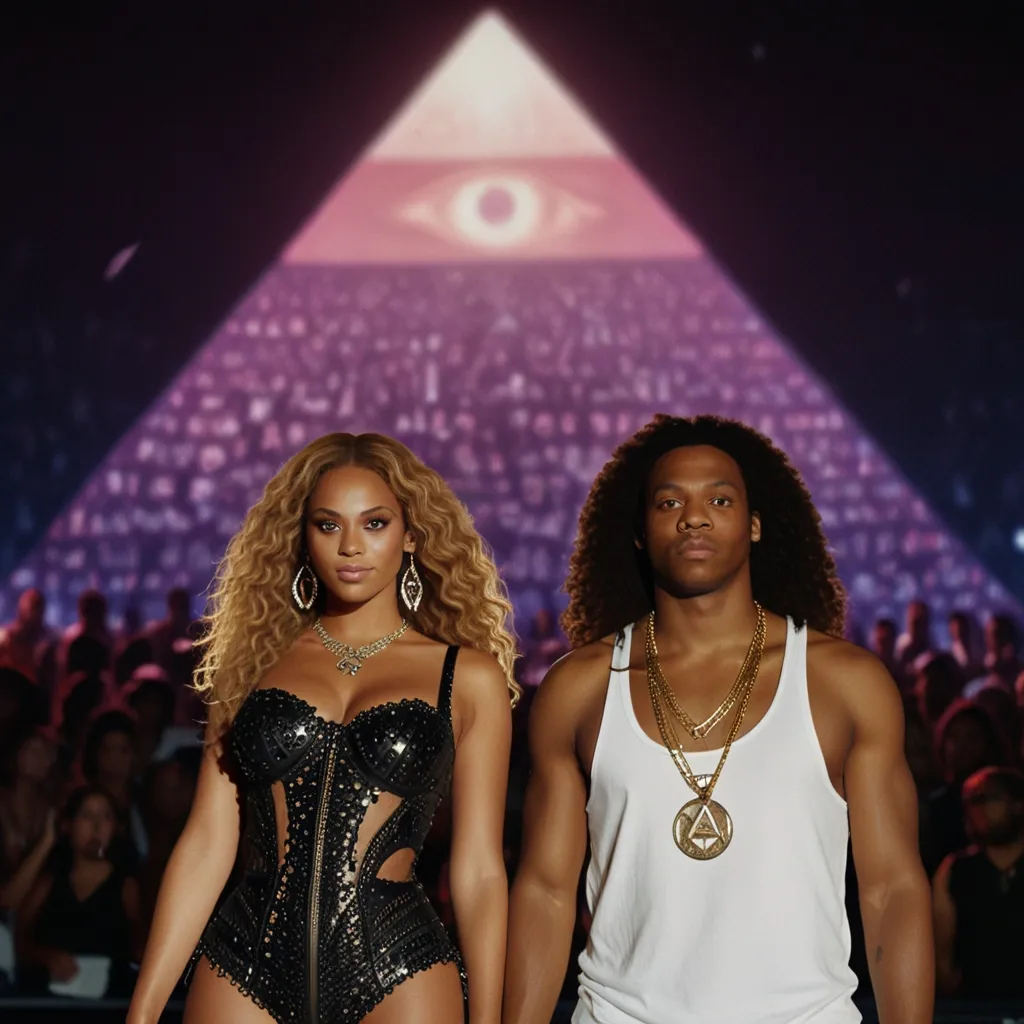
These days, the Illuminati is often tied to the music biz. Tons of pop stars and rappers are said to be part of the group, with names like Jay-Z, Kanye West, and Beyoncé often thrown around. People point to their music videos and shows, claiming the use of symbols like the all-seeing eye and the pyramid as proof of their secret allegiance.
The theory goes that these artists aren’t just making music; they’re working for the Illuminati, subtly spreading the group’s influence and pushing for a New World Order. The heavy use of these symbols in album art, videos, and even clothes keeps the rumor mill churning, making fans question everything their favorite artists do.
This whole Illuminati-in-music idea has become so big that it shapes how we think about our idols. Fans often wonder if their fave stars are part of this hidden crew, and some believe you can’t make it big in music without Illuminati support. This has created a conspiracy culture where every little thing done by these celebs is picked apart for hidden messages.
Despite all this, many artists have openly laughed off these rumors. Jay-Z, for instance, has brushed them off as “stupid.” But the fact these theories won’t die shows there’s a deep fear of unseen powers at play, and a craving to explain others’ success through forces other than sheer talent and hard work.
The whole Illuminati vibe has seeped into much more than music. It’s inspired books, films, and even role-playing games. The British electronic band KLF named themselves after a bunch of Discordians who sneak into the Illuminati in “The Illuminatus Trilogy” by Robert Anton Wilson. This mix of fact and fiction just keeps the Illuminati story alive and kicking.
So, the Illuminati has gone from an old secret club to a huge part of our culture today. We see it everywhere in the music scene, with artists accused left and right, and its symbols now part of everyday talk. Whether there’s truth to it or not, the Illuminati myth keeps grabbing our attention, showing our deep-rooted fears and our quest for hidden truths.